
Common Mistakes to Avoid When Operating an Ultrasonic Cleaner
Ultrasonic cleaning is one of the fastest and most efficient ways to achieve surgical-grade cleanliness for industrial, medical, and automotive parts. However, simply filling the tank with water and tossing your items inside will not guarantee perfect results. In fact, improper operation can drastically reduce cleaning efficiency and even shorten the lifespan of your machine.
To maximize your equipment’s performance, make sure to avoid these five common operational mistakes.
Mistake 1: Placing Parts Directly on the Bottom of the Tank
This is the most frequent mistake made by beginners. Placing heavy metal parts directly on the floor of the ultrasonic tank restricts the movement of the tank wall and dampens the vibration of the transducers attached underneath.
- The Risk: This creates a hot spot that can overheat and burn out the ultrasonic transducers, while simultaneously scratching the stainless steel tank, leading to premature tank failure.
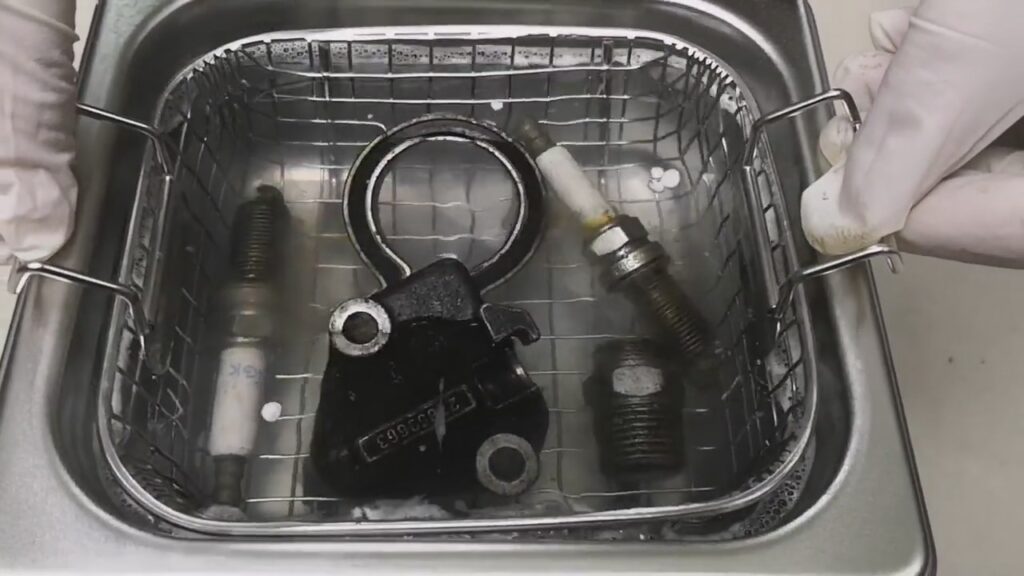
- The Solution: Always use the dedicated stainless steel wire basket supplied with your machine to suspend parts at the optimal height.
Mistake 2: Using Plain Water Without a Chemical Solution
Water is excellent at transmitting ultrasonic waves, but it has high surface tension and cannot dissolve oils or greases on its own.
- The Risk: Running a cycle in plain water will yield disappointing results, leaving oily films untouched.
- The Solution: Always add a small percentage of specialized, water-based ultrasonic cleaning solution. Alkaline solutions work best for greases and oils, while acidic solutions excel at removing rust and scale.
Mistake 3: Skipping the “Degas” Cycle After Changing Fluid
Fresh tap water contains a high volume of dissolved gases and microscopic air bubbles. When you turn on the ultrasonics, these air bubbles act as cushions, absorbing the shockwaves generated by cavitation implosions.
- The Risk: Severely degraded cleaning power during the first few cycles.
- The Solution: Every time you fill the tank with fresh fluid, run the machine’s Degas mode (or run a standard cycle without parts) for 5 to 10 minutes to expel trapped air before starting a real wash.
Mistake 4: Overloading the Basket
It can be tempting to jam as many parts into a single basket as possible to save time. However, ultrasonic waves require a clear path through the liquid to reach every surface.
- The Risk: Shadowing effects, where parts in the center or bottom of a dense pile remain dirty because the ultrasonic waves were blocked by surrounding items.
- The Solution: Arrange parts in a single layer with adequate spacing to allow the fluid to circulate freely around all surfaces.
Mistake 5: Setting the Temperature Too High for Oily Contaminants
While heat generally improves cleaning efficiency by softening grease, exceeding the optimal temperature threshold can backfire.
- The Risk: Most ultrasonic cleaning chemicals lose their effectiveness if the fluid exceeds 65°C-70°C. Furthermore, excessive heat can cause certain proteins or greases to bake onto the metal surface, making them harder to remove.
- The Solution: For most industrial applications, maintain a stable temperature between 50°C-60°C for the best chemical synergy.