







Ultrasonic Cleaning Machine Overview
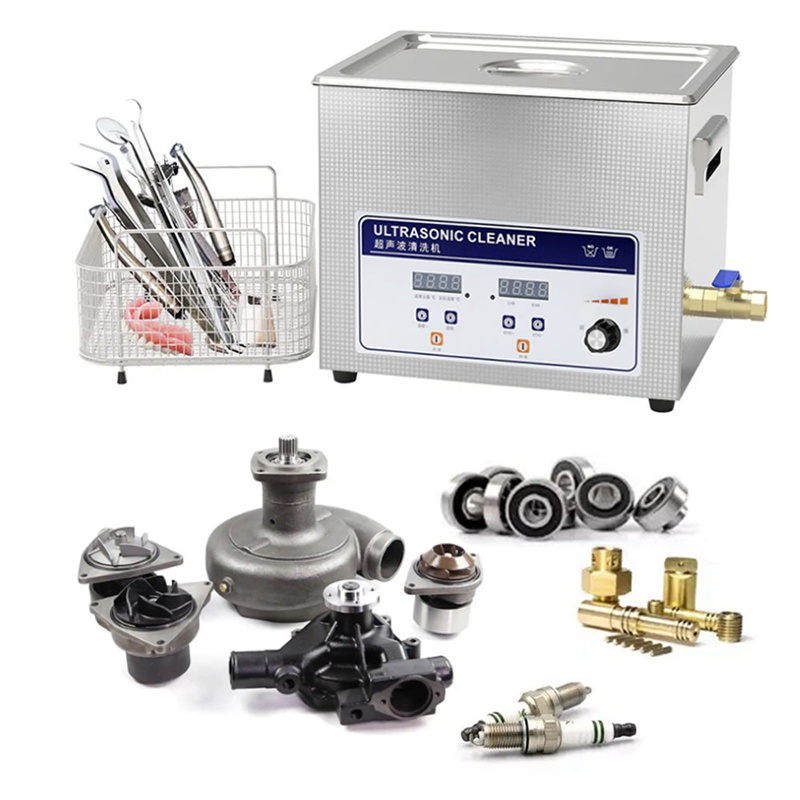
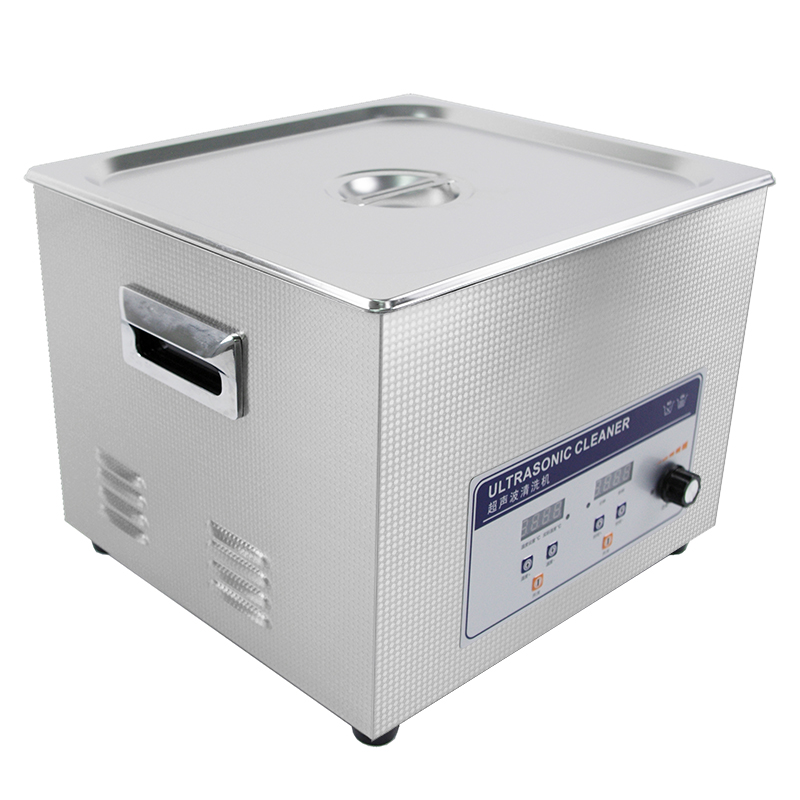
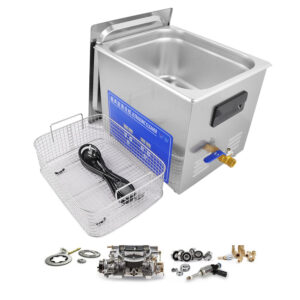
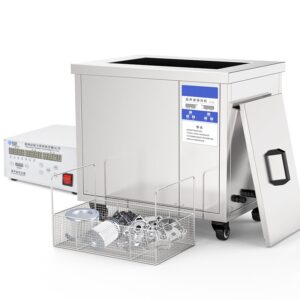
The SIWEEP Ultrasonic Cleaning Machine features adjustable ultrasonic power for greater control over the cleaning process. The power can be adjusted according to the part material, size, and level of contamination, providing flexible ultrasonic cleaning for different applications. With 40 kHz ultrasonic cleaning, built-in heating, digital controls, and SUS304 stainless steel construction, it is designed for efficient cleaning of parts, tools, and components.
| Model / Capacity | Volume (Gallon) | Ideal Applications |
|---|---|---|
| 6.5L | 1.7 Gal | Small tools, jewelry, small hardware, and compact components. |
| 10L | 2.6 Gal | Mid-sized hardware, carburetors, electronic components, and optics. |
| 15L | 4.0 Gal | Automotive parts, engine valves, longer tools, and workshop applications. |
| 22L | 5.8 Gal | Heavy-duty parts, larger hardware, and multi-item cleaning batches. |
| 30L | 7.9 Gal | Large components, longer metal parts, and higher-volume cleaning. |
Technical Specifications
| Capacity | Ultrasonic Power | Heat Power | Ultrasonic Frequency | Tank Size (L*W*H) | Ext. Size (L*W*H) | Packing Size (L*W*H) |
|---|---|---|---|---|---|---|
| 6.5L / 1.7Gal | 180W | 300W | 40 kHz | 300*150*150mm (11.8*5.9*5.9in) | 325*180*280mm (12.8*7.1*11in) | 410*255*355mm (16.1*10*14in) |
| 10L / 2.6Gal | 240W | 300W | 40 kHz | 300*240*150mm (11.8*9.4*5.9in) | 325*265*280mm (12.8*10.4*11in) | 435*360*350mm (17.1*14.2*13.8in) |
| 15L / 4.0Gal | 360W | 300W | 40 kHz | 330*300*150mm (13*11.8*5.9in) | 360*325*285mm (14.2*12.8*11.2in) | 460*410*340mm (18.1*16.1*13.4in) |
| 22L / 5.8Gal | 480W | 500W | 40 kHz | 500*300*150mm (19.7*11.8*5.9in) | 530*325*285mm (20.9*12.8*11.2in) | 635*405*340mm (25*15.9*13.4in) |
| 30L / 7.9Gal | 600W | 500W | 40 kHz | 500*300*200mm (19.7*11.8*7.9in) | 530*325*325mm (20.9*12.8*12.8in) | 635*405*390mm (25*15.9*15.4in) |
Key Features
- Adjustable Ultrasonic Power — Adjust cleaning intensity for different parts and contamination levels.
- 40 kHz Ultrasonic Cleaning — Provides effective cavitation for general-purpose parts cleaning.
- 304 Stainless Steel Construction — Durable construction for professional ultrasonic cleaning applications.
- Built-In Heating — Helps improve cleaning performance for oil, grease, and other contaminants.
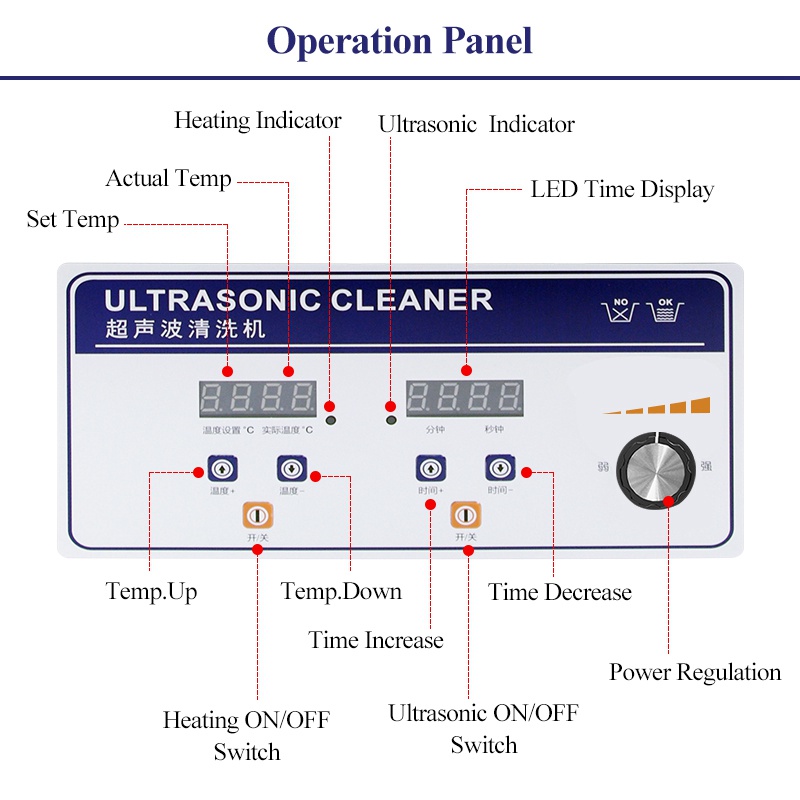
- Digital Controls — Convenient adjustment of cleaning time, temperature, and ultrasonic power.
- Multiple Tank Sizes — Available in different capacities for various cleaning requirements.
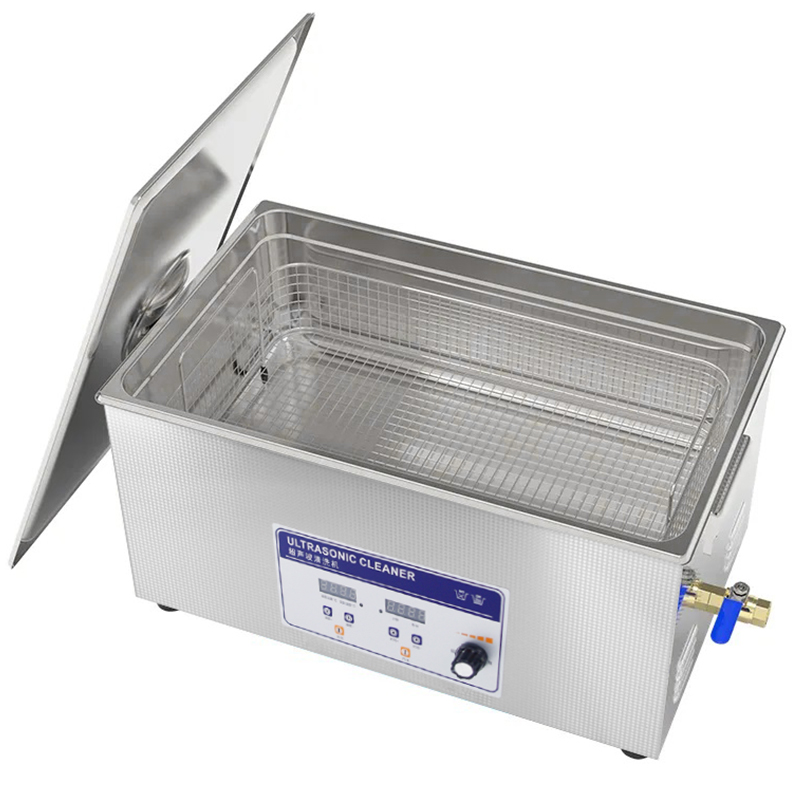
- Built-In Drain Outlet — Makes cleaning solution draining and replacement easier.
What Can an Ultrasonic Cleaning Machine Clean?
SIWEEP Ultrasonic Cleaning Machine uses ultrasonic cavitation to help remove a wide range of contaminants from part surfaces and hard-to-reach areas. With adjustable ultrasonic power, cleaning intensity can be adapted to different contamination levels.
- Oil and Grease — Removes oils, lubricants, and grease from contaminated parts.
- Dirt and Dust — Helps loosen embedded dirt and surface contaminants.
- Carbon Deposits — Suitable for parts with carbon and combustion-related residues.
- Machining Residues — Removes cutting fluids, metal particles, and production residues.
- Rust and Oxidation Residues — Can assist with suitable cleaning processes for affected components.
- Debris in Hard-to-Reach Areas — Ultrasonic cavitation reaches gaps, holes, grooves, and other difficult areas.
Ultrasonic Cleaning Machine Applications
SIWEEP Ultrasonic Cleaning Machine is suitable for professional parts cleaning across a wide range of maintenance, repair, manufacturing, and workshop applications. Adjustable ultrasonic power allows users to select an appropriate cleaning intensity for different parts, materials, and cleaning requirements.
- Automotive Parts Cleaning — For cleaning engine components, valves, fittings, tools, and other automotive parts.
- Metal Parts Cleaning — Suitable for machined parts, metal components, hardware, and mechanical assemblies.
- Tools and Equipment Cleaning — Helps clean hand tools, workshop equipment, maintenance tools, and reusable components.
- Precision Component Cleaning — Provides controlled ultrasonic cleaning for small components and parts with complex shapes.
- Mechanical Parts Cleaning — Suitable for bearings, fittings, gears, fasteners, and other mechanical components.
- Maintenance and Repair — Supports routine cleaning of parts during equipment maintenance, servicing, and repair.
- Manufacturing Applications — Can be used for parts cleaning before assembly, inspection, finishing, or other production processes.
- Workshop Cleaning — Provides a practical ultrasonic cleaning solution for professional workshops and service environments.
What’s Included in the Box?
- 1 x Ultrasonic Cleaner
- 1 x Stainless Steel Cleaning Basket
- 1 x Soundproof Lid
- 1 x Power Cord
- 1 x Detailed User Manual
Why Choose SIWEEP?
SIWEEP focuses on providing reliable ultrasonic cleaning equipment for professional parts cleaning, with practical solutions for different cleaning requirements.
- Reliable Cleaning Solutions — Equipment designed for consistent performance in professional cleaning environments.
- Flexible Product Selection — Multiple ultrasonic cleaning models and configurations for different applications and cleaning requirements.
- Quality-Focused Manufacturing — Attention to equipment construction, performance, and long-term usability.
- Practical Industrial Experience — Solutions designed around real-world parts cleaning and maintenance needs.
- Responsive Technical Support — Assistance with equipment selection, operation, troubleshooting, and maintenance.
- US Customer Support — Direct support for customers in the United States.
How to Use an Ultrasonic Cleaning Machine
Using an Ultrasonic Cleaning Machine with adjustable power is simple and efficient when following the correct cleaning steps:
- Fill the Tank — Add a suitable ultrasonic cleaning solution to the tank. Do not operate the machine without sufficient liquid.
- Preheat the Solution — Set the desired cleaning temperature based on the parts and type of contamination.
- Load the Parts — Place parts in the cleaning basket and avoid overcrowding to allow effective ultrasonic cleaning.
- Adjust Ultrasonic Power — Select an appropriate power level based on the material, part condition, and contamination level.
- Set Cleaning Time — Choose a suitable cleaning cycle and increase the time when additional cleaning is needed.
- Start the Cleaning Cycle — Run the 40 kHz ultrasonic cleaning cycle to loosen and remove oil, grease, dirt, carbon, and other contaminants.
- Rinse and Inspect — Remove the parts after cleaning, rinse when appropriate, and inspect the results.
- Drain and Maintain — Drain heavily contaminated solution through the drain outlet and clean the tank as needed.
Tips for Best Cleaning Results
- Choose the Right Power Level — Use lower power for delicate parts and higher power for heavier contamination.
- Use a Suitable Cleaning Solution — Select a solution appropriate for the parts and contaminants.
- Avoid Overloading — Leave enough space between parts for effective ultrasonic cleaning.
- Adjust Temperature and Time — Set suitable temperature and cleaning time based on the material and contamination.
- Pre-Rinse Heavily Soiled Parts — Remove thick debris or excess oil before ultrasonic cleaning when necessary.
- Use the Cleaning Basket — Keep parts off the tank bottom for more consistent cavitation.
- Degas the Solution — Run a short cycle before cleaning to improve cavitation performance.
- Maintain the Tank — Replace contaminated solution and clean the tank regularly for consistent cleaning results.
- Never Run Dry — Always maintain sufficient liquid in the tank to protect the ultrasonic cleaning machine.
Frequently Asked Questions
Q: What is an Ultrasonic Cleaning Machine with adjustable power?
A: An Ultrasonic Cleaning Machine with adjustable power uses ultrasonic cavitation to clean parts, tools, and components while allowing users to adjust ultrasonic power according to the material, part condition, and level of contamination.
Q: What is the benefit of adjustable ultrasonic power?
A: Adjustable ultrasonic power gives users greater control over cleaning intensity. Lower power can be selected for more delicate parts, while higher power can provide stronger cleaning action for heavily contaminated components.
Q: Can I adjust the ultrasonic power during cleaning?
A: The ultrasonic power can be set according to the cleaning requirements of different parts and applications. Select an appropriate power level before starting the cleaning cycle and adjust it between cycles as needed.
Q: What can an adjustable power Ultrasonic Cleaning Machine clean?
A: It can be used for automotive parts, metal components, mechanical parts, tools, precision components, fittings, and other parts that require ultrasonic cleaning.
Q: What frequency does this Ultrasonic Cleaning Machine use?
A: This model uses 40 kHz ultrasonic cleaning, providing effective cavitation for general-purpose parts and component cleaning.
Q: Can the ultrasonic power be reduced for delicate parts?
A: Yes. The adjustable power function allows users to select a lower cleaning intensity when working with more delicate components or parts that require gentler ultrasonic cleaning.
Q: Can I use higher ultrasonic power for heavily contaminated parts?
A: Yes. Higher power settings can provide stronger ultrasonic cleaning action for parts with heavier oil, grease, dirt, carbon, and other contamination.
Q: Can the temperature and cleaning time also be adjusted?
A: Yes. The Ultrasonic Cleaning Machine features digital time and temperature controls, allowing users to set the cleaning cycle and solution temperature according to the parts and cleaning requirements.
Q: What tank sizes are available?
A: The adjustable power Ultrasonic Cleaning Machine is available in multiple tank capacities, including 6.5L, 10L, 15L, 22L, and 30L, providing options for different part sizes and cleaning volumes.
Q: How long does ultrasonic cleaning take?
A: Cleaning time depends on the part material, size, contamination level, cleaning solution, temperature, and ultrasonic power setting. Start with an appropriate cycle and adjust the time based on the cleaning results.
Q: Can I use plain water in an Ultrasonic Cleaning Machine?
A: Water can be used for some cleaning applications, but a suitable ultrasonic cleaning solution is generally recommended for better removal of specific contaminants. Select the cleaning solution according to the parts and contamination.
Q: Should parts touch the bottom of the ultrasonic cleaning tank?
A: Parts should be placed in the cleaning basket rather than directly on the tank bottom. This helps maintain more consistent ultrasonic cavitation and protects the tank surface.
Q: Is an adjustable power Ultrasonic Cleaning Machine suitable for professional use?
A: Yes. The adjustable ultrasonic power provides greater flexibility for professional parts cleaning, allowing the cleaning intensity to be matched to different parts, materials, and contamination levels.
Ultrasonic Cleaning Machine User Manual
For detailed operating instructions and technical information, please refer to the Ultrasonic Cleaning Machine User Manual.
Need a Custom Solution?
If you require a customized solution to meet your specific application, size, power, frequency, or other technical requirements, please feel free to contact us at [email protected]. Our team will be happy to discuss your requirements and provide a suitable solution.
Reviews
Be the first to review this product!